|
We’ve all been there. You go to open a kitchen cabinet, and instead of a smooth, clean surface, your fingers meet a tacky, stubborn layer of mystery grime. It’s kitchen cabinet grease—a lovely cocktail of cooking oils, steam, dust, and time. The immediate temptation is to grab the heavy hitters: harsh chemical degreasers or abrasive scrubbing pads. Stop right there! While those methods might blast away the grease, they will almost certainly take your cabinet’s original finish, stain, and patina right along with it, leaving you with patchy, dull, and damaged wood. Fortunately, you don’t have to risk ruining your cabinetry. Here is how you can melt away years of sticky kitchen buildup safely and restore that beautiful wood using The Victorian House Finish Rejuvenator. Why Standard Degreasers are a Nightmare for Wood Finishes Most kitchen cabinets are finished with lacquer, varnish, or shellac. Over time, grease chemically bonds with these finishes. When you use harsh household cleaners (like dish soap diluted in too much water, vinegar, or commercial spray degreasers), two things happen:
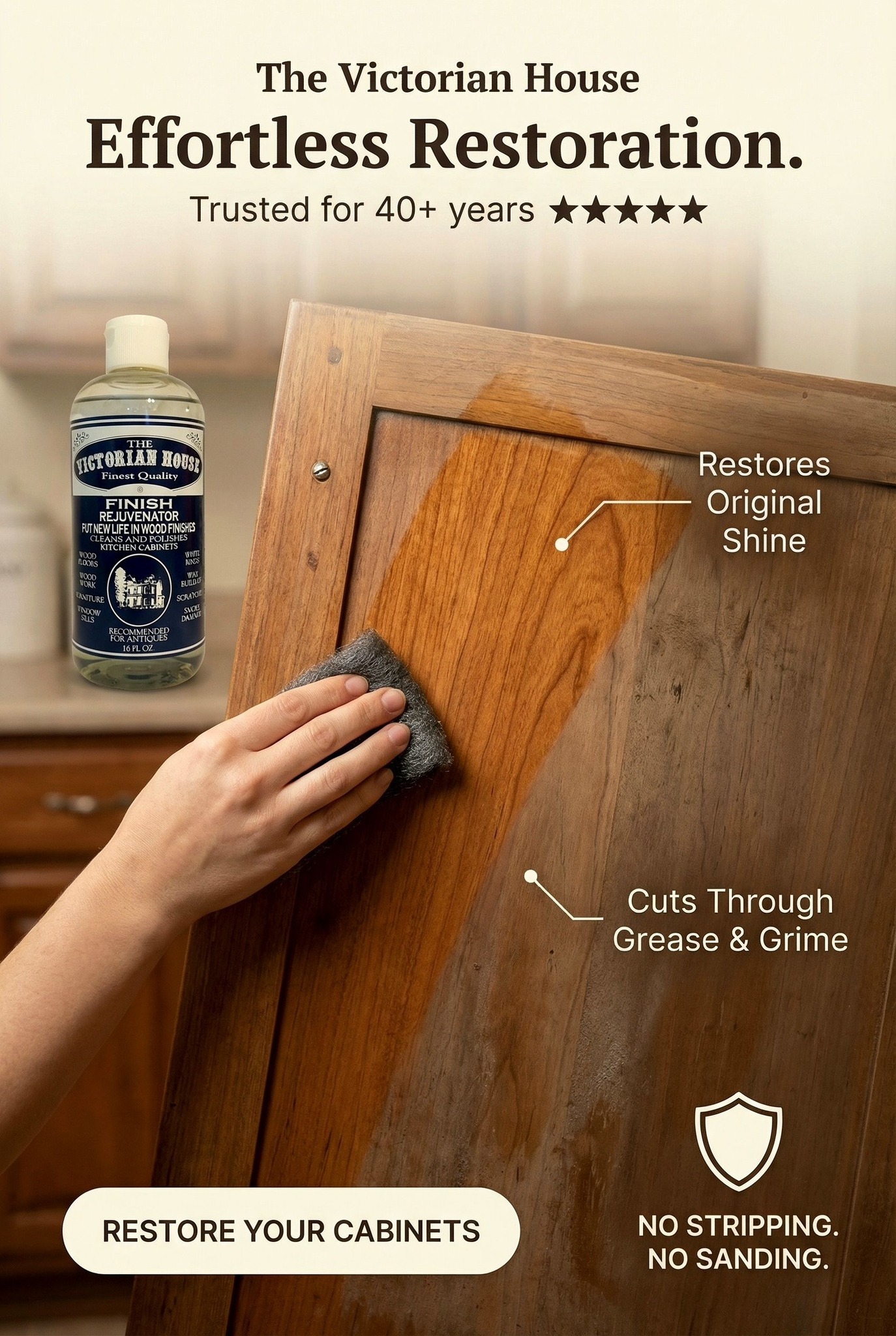
To save your finish, you need a product designed to differentiate between the grime and the actual wood coating. That is where The Victorian House Finish Rejuvenator comes in. It is uniquely formulated to dissolve grease, wax, and dirt buildup without softening or stripping the original underlying finish. The Step-by-Step Restoration Guide grab your supplies.
Step 1: Prep the SurfaceYou Can Give your cabinets a quick wipe with a dry paper towel to remove any loose, superficial dust or pet hair but Do not wash them with anything. WATER especially just makes grease gummy. Step 2: Apply the RejuvenatorShake the bottle of The Finish Rejuvenator WELL. Pour a small amount directly onto a half pad of your #0000 super-fine steel wool.
Step 3: Apply wet and even with the GrainUsing light to medium pressure, start at the top and go to the bottom applying the Rejuvenator evenly. It is fine to stop at any point and wipe just don't let it dry or you will have to start over. Its fine to do sections there will be No lap marks. This is the way you will work on a wood floor or baseboards, a section at a time. As you move the steel wool across the surface, you will actually feel the resistance change. It will feel "draggy" over the heavy grease spots, and suddenly become smooth and slick as the Rejuvenator dissolves the buildup. Step 4: Wipe Away the dissolved build-upDon't let the product dry on the wood. Immediately follow up with a highly absorbent Bounty paper towel to wipe away the liquefied grease and excess product. You’ll likely see a brown or yellowish residue on the paper towel—that’s years of kitchen grime finally letting go! Step 5: Buff to a Beautiful ShineTake a fresh, dry paper towel and give the cabinet a final buffing or even two. The Finish Rejuvenator doesn't just clean; it feeds the wood and restores the depth of the original color, leaving a clean, smooth, protective satin glow. The shine lasts for years. If it was a high shine originally it will be again, a satin finish will be just that, a satin finish. Thats why its great for antiques. Keeping Your Cabinets Grease-FreeYes you can use the Rejuvenator any time you need it--No buildup. Now that your cabinets look like they belong in a historic restoration magazine rather than a greasy spoon diner, here is how to keep them that way:
The VerdictYou don’t need to sand, strip, or completely re-stain your kitchen to get rid of ugly, tacky grease. By using a specialized product like The Victorian House Finish Rejuvenator, a bit of super-fine steel wool, and some heavy-duty Bounty paper towels, you can peel back decades of kitchen grime in an afternoon—revealing and protecting the gorgeous original woodwork underneath.https://www.thevictorianhouseproducts.com/all-the-victorian-house-products/ |